Why New Construction Homes Are Suddenly Cheaper Than Used Ones
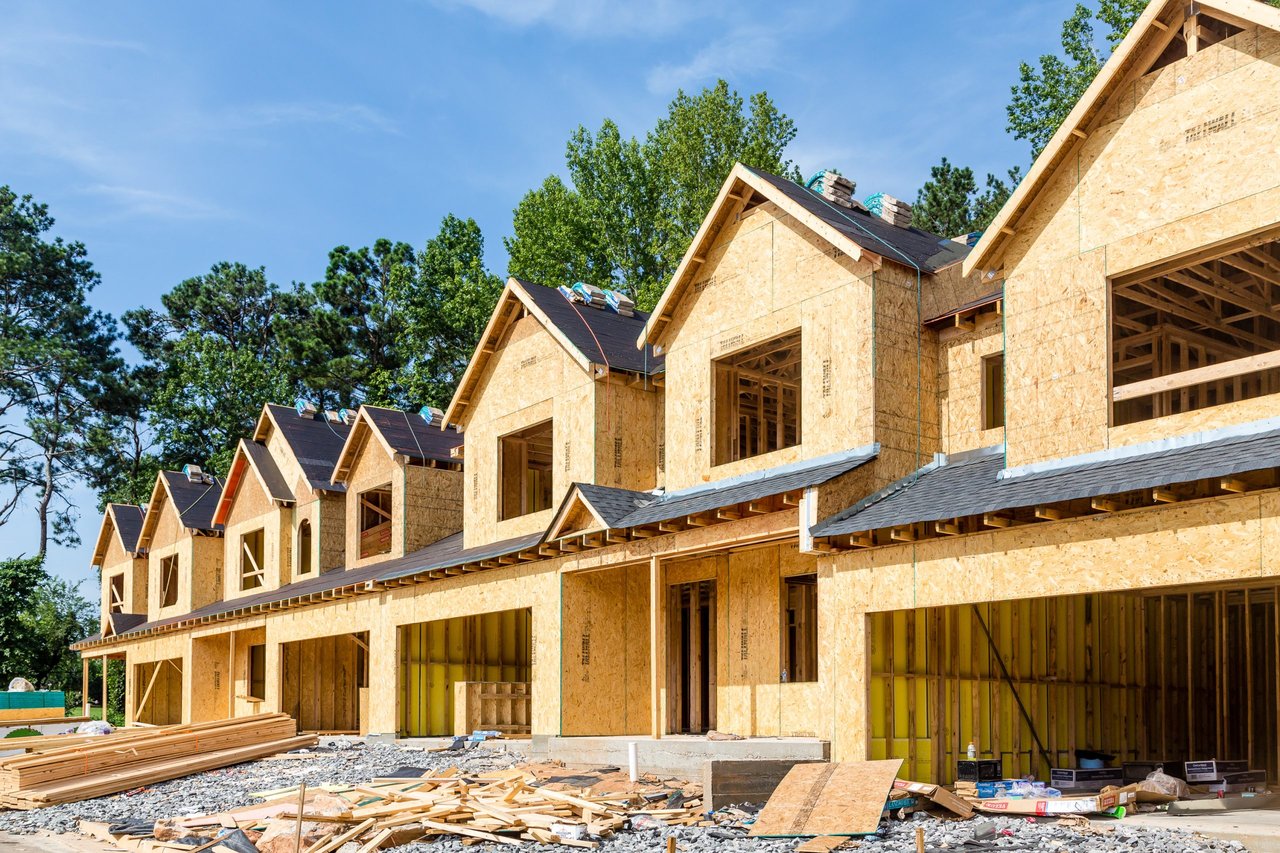
Since 1987, a brand-new home has cost about 16% more than a used one, on average. That's the whole idea of "new." You pay extra for the fresh paint and the warranty.
This spring, that premium hit negative 2%.
That figure comes from John Burns Research and Consulting, as reported by Fortune, and it means new construction homes are now, on balance, cheaper than the houses people have already lived in. We at the Kirsch Real Estate Team had to read that one twice. In the West, the gap is enormous. And this month, builders started discounting even harder.
The short version
The flip nobody expected
The National Association of Home Builders compared the two national medians for the second quarter. New single-family homes: $410,700. Existing homes: $435,700. That $25,000 gap was the largest between the two trends, and existing homes have out-priced new ones in six of the last nine quarters.
Census data for August put the median new home at $393,700, while NAR's median existing single-family home was $434,800, about $41,100 higher, per Inman.
Why are new construction homes cheaper right now?
Two very different sellers are behind those numbers.
The homeowner down the street isn't in a hurry. Lots of existing owners are sitting on low pandemic-era mortgage rates and simply aren't listing. That keeps resale inventory lean and resale prices sticky. NAR's September median of $417,500 was the 39th straight month of year-over-year gains.
The builder is in a hurry. A builder with finished homes is paying for land, loans and crews every month those homes sit. Census counted 483,000 new homes for sale at the end of August, which is 8.5 months of supply. The resale market, by NAR's count, had 4.8 months.
So builders do what motivated sellers do. They deal.
NAHB's October builder survey, reported by Scotsman Guide, showed about 43% of builders cutting prices, the highest share in six years. Nearly two-thirds used sales incentives. Builder sentiment fell to 29, the weakest since 2012.
Translation: a lot of builders want to talk to you.
The catch: you're not comparing the same house
NAHB itself describes the national reversal as a regional and compositional phenomenon, which is economist for "the averages are hiding something."
Builders have been building smaller homes on smaller lots, farther from city centers. Fortune, citing NAHB, reported the median new home is about 2,400 square feet, down from about 2,700 in the mid-2010s. A cheaper median can partly mean a smaller, more distant house, not a better deal.
So don't compare medians. Compare homes. Price per square foot, lot size, commute, HOA dues, and what's actually included. A new home with no blinds, landscaping or fence still needs money; so does a 1990s resale with an old roof. Price both honestly.
The money math: a buydown can beat a price cut
Freddie Mac's October 15 survey put the average 30-year fixed at 7.40%, up from 6.27% a year earlier. When rates are this high, what a builder does with their incentive dollars matters as much as the price.
Here's a hypothetical. Say you're borrowing $400,000.
- At 7.40%, principal and interest is about $2,770 a month.
- If a builder pays to buy your rate down to 5.99%, it's about $2,396.
That's roughly $374 a month. To get that same payment at 7.40%, you'd have to borrow only about $346,000. In other words, that buydown works like a $54,000 price cut on your monthly budget.
Offers and buydown costs vary. But John Burns estimated builder incentives at roughly 7% to 8% of sale prices, which is real money on a $450,000 house.
Our take: if you plan to stay in the home a long time, ask for the rate. If you think rates will drop and you'll refinance in two years, a straight price cut is the better gift, because it stays with you after the refinance. Either way, ask if the buydown is permanent or temporary.
What it means for Reno and Lake Tahoe
The West is where this trend is loudest. NAHB put the Western median existing home at $636,900 in Q2 and the median new home at $546,700, a $90,200 gap. Washoe County's median sale price was $575,000 in Q3, per Sierra Nevada Realtors.
Around Reno, new construction is concentrated on the edges: Damonte Ranch and the South Meadows area, Spanish Springs, Verdi, and the newer communities in north Sparks, plus Lompa Ranch down in Carson City. Established neighborhoods like Old Southwest, Caughlin Ranch and Newlands Manor have almost no new supply, so the comparison there is resale against resale. Our Reno neighborhood guide is a good place to see how those areas differ.
At Lake Tahoe, the story mostly skips town. New construction at the lake is rare and tightly regulated, so in Incline Village and around the shore, resale is the market.
Buying in Reno? Tour one new community and one resale, then compare total monthly cost, not sticker price. Our buyer's guide covers how to structure offers, and you can browse current Reno and Tahoe listings side by side.
If you're selling a resale home in a newer part of town, know that your real competition may be the model home two streets over offering a buydown. A seller credit toward the buyer's rate can level that field. Our seller's guide walks through it.
The Kirsch Real Estate Team is a Reno and Lake Tahoe luxury real estate team led by Laura Kirsch, operating through Marmot Properties in Nevada and partnering with Sierra Sotheby's International Realty in California. Laura was named to NAR's 2025 30 Under 30.
New construction homes FAQ
Are new construction homes cheaper than existing homes?
Often, yes, right now. NAHB reported a Q2 2026 national median of $410,700 for new single-family homes versus $435,700 for existing homes. In the West, existing homes cost $90,200 more at the median. New homes tend to be smaller and farther out, though, so compare price per square foot and total costs.
Why are builders offering so many incentives in 2026?
Builders are carrying more unsold inventory and seeing fewer buyers. NAHB's October 2026 survey found about 43% of builders cutting prices, the most in six years, and nearly two-thirds offering incentives. Higher mortgage rates, near 7.40% in mid-October per Freddie Mac, have reduced how many buyers can qualify.
Is a rate buydown better than a price reduction?
It depends on how long you keep the loan. A buydown lowers your monthly payment and can be worth more than an equal price cut if you stay put. If you expect to refinance soon, a price reduction lasts longer because it stays after the refinance. Ask whether the buydown is permanent or temporary.
Are there new construction homes in Reno?
Yes. Most new construction around Reno is on the edges of the metro, including Damonte Ranch, the South Meadows area, Spanish Springs, Verdi and north Sparks, with Lompa Ranch in nearby Carson City. Established central neighborhoods and Lake Tahoe communities have very little new construction.
New or resale? Let's compare the real numbers.
If you've got a model home and a resale on your shortlist, send them our way and we'll help you compare what each one really costs per month. No pressure. Just get in touch with the Kirsch Real Estate Team.
Written by the Kirsch Real Estate Team, Reno and Lake Tahoe real estate.