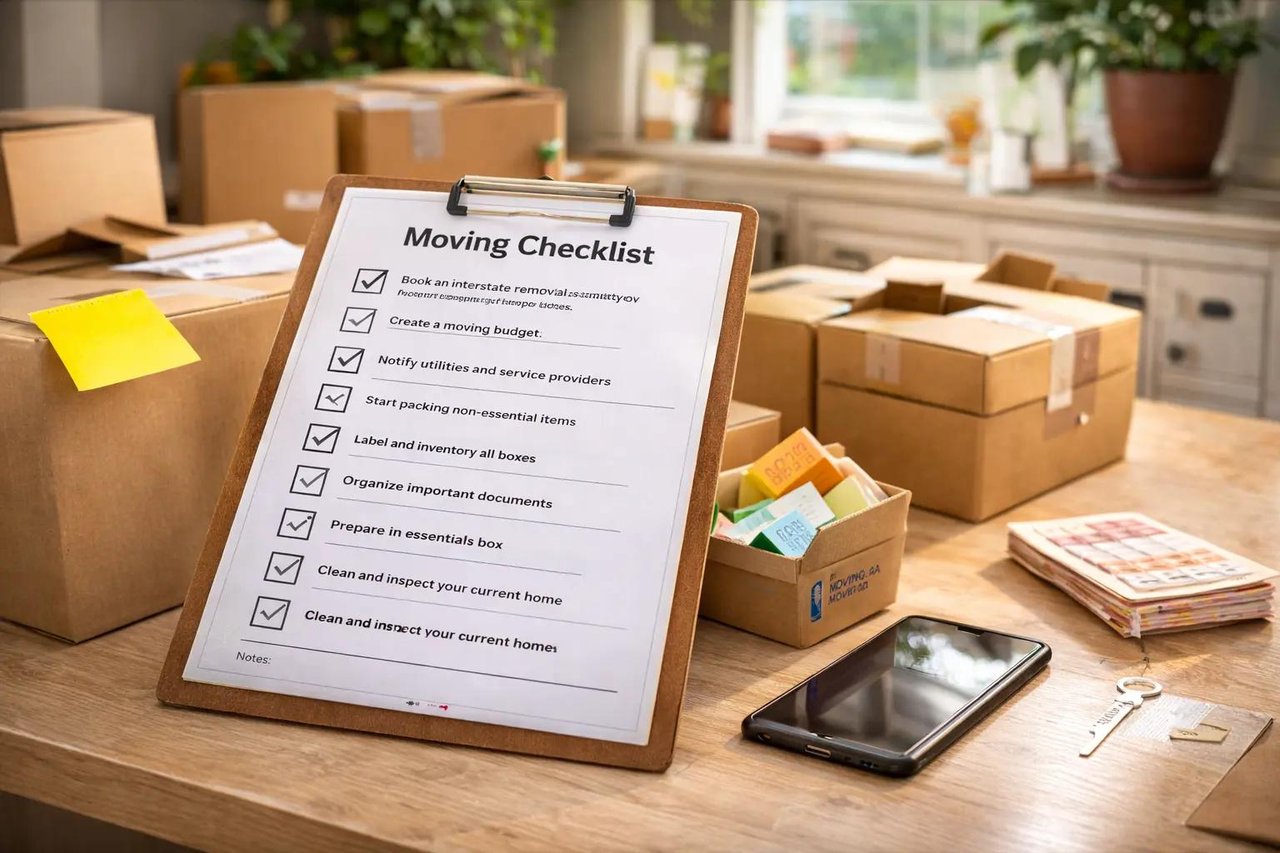
Nevada Residency Checklist: What to Update After Moving to Reno
To establish Nevada residency, you need to do more than purchase a home or change your mailing address. A strong residency record shows that Nevada has genuinely become the center of your personal, financial and professional life.
After moving to Reno or another Northern Nevada community, new residents should update their driver’s license, vehicle registration, voter registration, tax records, financial accounts, insurance policies, estate-planning documents and other important connections.
This Nevada residency checklist explains where to begin, which records to keep and why consistency matters, especially for people moving from California or preparing for a business sale, stock transaction or other major financial event.
What Does It Mean to Establish Nevada Residency?
Residency and domicile are related, but they are not always identical.
You may own or occupy more than one residence, but you typically have only one legal domicile. Your domicile is the place you consider your permanent, principal home and intend to return to when you are away.
Nevada law allows an individual to file a sworn declaration stating that Nevada is their permanent and principal home. However, filing a declaration is only one possible piece of evidence. Nevada law recognizes that domicile may also be established through other methods.
If your former state questions your move, it may look at your entire pattern of life rather than one document. California, for example, determines residency based on the facts and circumstances of the individual situation.
The strongest approach is to make a real move and then update your records consistently.
Nevada Residency Checklist
Before or Immediately After Your Move
1. Establish a Primary Home in Nevada
Purchase or lease a Nevada home that you genuinely intend to use as your principal residence.
Keep copies of:
- Your purchase agreement or lease
- Closing documents
- Moving-company invoices
- Utility start dates
- Homeowners or renters insurance
- Initial repair, furnishing and moving receipts
- Documents showing when you took possession and began occupying the property
Owning a Reno home can support your residency, but ownership alone does not prove that Nevada is your permanent home. Your actual use of the property and the location of the rest of your life also matter.
2. Document the Date You Actually Moved
Choose and document a clear move date with your CPA and attorney.
The date you closed on a home may not be the same date your residency changed. If you continued living, working and maintaining your primary household in another state after closing, that state may argue that your move occurred later.
Keep records such as:
- Travel calendars
- Airline itineraries
- Credit-card statements
- Utility bills
- Moving receipts
- Mobile-phone location records when available
- Club or gym activity
- Medical appointments
- School records
- Home-security or access records
This documentation can be especially important during a year in which you receive substantial income or complete a major transaction.
3. Coordinate With Your CPA and Attorney
Before changing tax filings or completing a significant financial transaction, ask your advisors to address:
- Your intended change-of-residency date
- Part-year resident tax returns
- Income earned before and after the move
- Income that may remain sourced to your former state
- Business interests in other states
- Stock options or deferred compensation
- A pending business or stock sale
- Rental property
- Trust and estate-planning changes
If you are leaving California, you may need to file a part-year or nonresident California return. California may also continue taxing certain California-source income after you become a Nevada resident.
Do not wait until a liquidity event is ready to close before beginning this conversation.
Within Your First 30 Days
4. Obtain a Nevada Driver’s License
Nevada’s DMV states that new residents must switch to a Nevada driver’s license within 30 days of establishing residency.
Review the DMV’s current document checklist before your appointment. Depending on the type of license or identification card requested, you may need:
- Proof of identity
- Your Social Security number
- Your existing out-of-state license
- Proof of your Nevada residential address
- Immigration documents, when applicable
- Name-change documents, if your current name differs from your identity documents
Nevada has separate documentation requirements for a standard license, Real ID and Driver Authorization Card. The DMV requires valid originals or certified copies of many documents.
Do not assume a digital copy or ordinary photocopy will be accepted.
5. Register Your Vehicles in Nevada
Review the Nevada DMV’s New Resident Guide and transfer your vehicle registrations as required. The process may involve:
- Nevada automobile insurance
- Your existing registration
- Vehicle title information
- Current odometer reading
- Vehicle identification number inspection
- Emissions testing, when applicable
- Surrender or handling of your former state’s plates
Nevada’s DriveNV system now offers online title and registration services for eligible new residents, although some situations may still require an office visit.
Update every vehicle you own, including recreational vehicles and motorcycles when applicable.
6. Update Your Automobile Insurance
Obtain Nevada-compliant insurance before registering your vehicles.
Make sure the policy reflects:
- Your actual Nevada garage address
- The correct drivers
- Every covered vehicle
- Your expected annual mileage
- Any business use
- Umbrella-liability coverage, when appropriate
Do not leave your former address on an insurance policy after relocating. An inaccurate garage or residence address can create coverage problems.
7. Register to Vote in Nevada
Eligible residents can register or update their Nevada voter information through the Nevada Secretary of State. Online registration is available to residents of every Nevada county.
You should also review and cancel or update your former voter registration as appropriate. You do not want inconsistent records suggesting that you continue to claim residency elsewhere.
Voting in Nevada can be one factor supporting your intent to make the state your permanent home, but no single action establishes domicile by itself.
During Your First 30 to 90 Days
8. Update the IRS and Tax Authorities
Use your Nevada address when filing future federal tax returns.
The IRS allows individuals to report a new home mailing address using Form 8822. Businesses and entities generally use Form 8822-B to report a new business mailing address, business location or responsible party.
Also ask your tax professional whether you need to update:
- Your former state’s tax authority
- Estimated tax-payment records
- Payroll withholding
- Business registrations
- Trust or estate tax records
- Partnership and corporate filings
Changing your mailing address does not, by itself, determine your tax residency. It is one part of maintaining consistent records after a genuine move.
9. Update Your Employer or Business Records
Ask your employer to update your permanent residential address, payroll records, benefits and state withholding.
If you own a business, speak with your CPA and business attorney before changing the company’s:
- Principal office
- Registered agent
- Payroll accounts
- Business licenses
- State registrations
- Banking information
- Tax filings
- Employee records
Moving personally to Nevada does not automatically move your company or terminate the company’s obligations in another state.
Remote employees should also confirm where their work is physically performed and whether travel back to their former state creates additional filing obligations.
10. Update Banks and Financial Accounts
Change the address associated with:
- Checking and savings accounts
- Brokerage accounts
- Retirement accounts
- Credit cards
- Loans
- Investment partnerships
- Private-equity interests
- Stock plans
- Cryptocurrency accounts
- Safe-deposit boxes
For a household with substantial assets, consider establishing relationships with Nevada-based financial, tax and legal professionals when appropriate.
Consistency across your financial records helps demonstrate that Nevada is your primary home.
11. Update Your Insurance Policies
Notify the carriers responsible for:
- Homeowners insurance
- Automobile insurance
- Umbrella coverage
- Life insurance
- Health insurance
- Disability insurance
- Long-term-care insurance
- Valuable personal property
- Business insurance
Coverage and provider networks can differ by state. Confirm that your policies remain valid and that your doctors, hospitals and preferred facilities are in-network.
12. Review Your Estate Plan
Have a qualified Nevada estate-planning attorney review your:
- Will
- Revocable or irrevocable trust
- Financial power of attorney
- Healthcare power of attorney
- Advance healthcare directive
- Beneficiary designations
- Business-succession documents
- Property titles
Documents executed in another state may remain valid, but a Nevada review can identify conflicts, outdated provisions or opportunities to coordinate your estate plan with Nevada law.
13. Update Professional and Personal Relationships
When practical, begin establishing your normal life in Nevada.
This may include:
- Physicians and dentists
- CPA and attorney
- Financial advisor
- Veterinarian
- Gym or fitness studio
- Religious organization
- Charities and community groups
- Clubs and social organizations
- Professional associations
- Children’s activities
Residency is not simply a paperwork exercise. The location of your ongoing relationships can help show where your life is actually centered.
Homeowner and Family Updates
14. Claim the Nevada Primary-Residence Property-Tax Cap
Qualifying owner-occupied primary residences in Washoe County may receive a partial property-tax abatement limiting increases in the annual tax bill to no more than 3%.
The cap applies to the tax bill—not the assessed value—and homeowners must properly identify the property as their primary residence.
Watch for correspondence from the Washoe County Assessor and verify that your home has the correct tax-cap status.
Contact the Assessor’s Office if:
- You receive a tax-cap claim form
- Your home is incorrectly categorized
- The property was previously a rental or second home
- Ownership is held in a trust or entity
- You believe the wrong cap was applied
15. Enroll Children in School
If your children will attend a Washoe County public school, confirm the school assigned to your new address directly with the district.
Schools commonly request documentation such as:
- A utility bill
- Signed lease
- Purchase agreement
- Mortgage statement
- Parent or guardian identification
- Birth certificate
- Immunization records
Washoe County School District materials identify utility bills, rental agreements and mortgage statements as common forms of residency documentation.
If you are considering private schools such as Sage Ridge, Brookfield, Bishop Manogue or one of Reno’s Catholic elementary schools, contact admissions early. Availability and application schedules vary.
16. Update Your Mailing and Household Records
Update your address with:
- United States Postal Service
- Utilities
- Mobile-phone provider
- Internet provider
- Medical providers
- Memberships
- Subscription services
- Loyalty programs
- Schools and childcare
- Pet licensing and microchip records
- Trusted contacts and family members
Make sure important tax, financial and legal documents are not continuing to arrive at your former residence.
Consider a Nevada Declaration of Domicile
Nevada law permits a person who resides in the state to file a sworn declaration stating that Nevada is their permanent and principal home. The declaration is signed under oath and filed with the clerk of the appropriate district court.
A declaration of domicile may be worth discussing with your attorney, particularly if you:
- Continue to own homes in multiple states
- Travel frequently
- Maintain business interests elsewhere
- Are moving shortly before a major financial event
- Expect your former state to closely examine the move
The declaration can support your intent, but it does not replace actually living in Nevada or updating the rest of your life.
Reduce Conflicting Ties to Your Former State
Establishing Nevada residency also requires looking at what you left behind.
Depending on your circumstances, consider:
- Selling or leasing your former primary residence
- Removing any homeowner exemption claimed elsewhere
- Updating your former voter registration
- Surrendering your former driver’s license
- Changing your vehicle registrations
- Moving important personal belongings
- Updating clubs and professional memberships
- Changing the address used on tax and financial documents
- Documenting time spent in each state
Continuing to maintain a fully available former home, driver’s license, voter registration and daily personal connections in another state may create an inconsistent story.
Before selling or renting your former home, speak with your CPA about the primary-residence capital-gains exclusion and the potential tax consequences of converting the property into a rental.
Keep a Nevada Residency File
Create a digital or physical folder containing:
- Nevada home purchase or lease documents
- Moving invoices
- Utility start confirmations
- Nevada driver’s license
- Nevada vehicle registrations
- Nevada voter registration
- Tax address-change forms
- Insurance policies
- Property-tax-cap documentation
- School enrollment records
- Updated estate-planning documents
- Travel and day-count records
- Receipts showing regular activity in Nevada
- Written advice from your CPA and attorney
The purpose is not to manufacture evidence. It is to preserve the documentation created by your genuine move in case questions arise later.
Frequently Asked Questions About Establishing Nevada Residency
How do I establish residency in Nevada?
There is no single step that establishes residency for every legal or tax purpose. Generally, you should establish a primary home in Nevada, physically move, update your license and registrations, move your personal and financial connections, and demonstrate an intent to make Nevada your permanent home.
Does buying a house in Reno establish Nevada residency?
Buying a Reno home is helpful evidence, but owning property alone does not automatically establish residency or domicile. You should actually occupy the home and consistently relocate the rest of your life.
How many days must I live in Nevada to become a resident?
There is no universal “183-day rule” that automatically resolves every Nevada residency or tax question. Different laws and programs may use different standards. Your former state may evaluate your intent, physical presence and overall connections.
How quickly do I need a Nevada driver’s license?
The Nevada DMV states that new residents must switch to a Nevada driver’s license within 30 days of establishing residency.
Do I need to file a Nevada income-tax return?
Nevada does not impose an individual state income tax, so residents generally do not file a Nevada individual income-tax return. You may still have federal filings and tax-return requirements in another state.
Will changing my address stop California from taxing me?
Not necessarily. California considers the complete facts and circumstances surrounding a residency change. California may also continue taxing California-source income after you become a nonresident.
Should I file a Nevada declaration of domicile?
It may be helpful in some circumstances, especially if you own multiple residences or maintain connections to another state. Discuss it with your attorney because it is only one part of establishing domicile.
Planning a Move to Reno or Northern Nevada?
Establishing residency works best when your real estate, tax, financial and legal plans are coordinated from the beginning.
Your CPA and attorney should advise you on the timing and documentation of your residency change. The Kirsch Real Estate Team can help you understand Reno’s housing market, compare neighborhoods and build a real estate timeline around your broader relocation plan.
We regularly help clients evaluate communities including Montreux, ArrowCreek, Southwest Reno, Saddlehorn, Rancharrah, Somersett and other areas throughout Reno and Northern Nevada. We also have a trusted local network of CPAs, financial advisors, estate-planning attorneys, lenders and other professionals available for introductions when needed.
Considering a move to Nevada? Contact the Kirsch Real Estate Team at Marmot Properties for a confidential, no-pressure conversation about Reno real estate and your potential timeline even if your move is still a year or two away.
This article is provided for general informational purposes only and is not tax, accounting, financial or legal advice. Residency rules vary by purpose and individual circumstances. Consult qualified tax and legal professionals before making residency or transaction decisions.
About Laura Kirsch and the Kirsch Real Estate Team
Laura Kirsch is a lifelong Northern Nevada resident and the leader of the Kirsch Real Estate Team at Marmot Properties. Licensed since age 18, Laura was recognized as a 2025 National Association of REALTORS® 30 Under 30 honoree and ranked by RealTrends Verified among the leading real estate agents in Nevada and Reno.
The Kirsch Real Estate Team helps clients buy and sell homes throughout Reno, Sparks and Northern Nevada, with particular experience in luxury real estate, relocation, Montreux, Southwest Reno, ArrowCreek, Saddlehorn and surrounding communities.